Unlock Liquidity from Illiquid Real Estate Assets
January 25, 2026

The real estate market has long been characterized by its inherent illiquidity, posing significant challenges for investors and asset holders seeking agile capital access. Integra is transforming this landscape by introducing innovative solutions that convert static real estate into dynamic, tradable digital assets. This article explores how tokenization and blockchain-based approaches are redefining liquidity for property investments in 2026.
Understanding Real Estate Illiquidity: Why It Matters
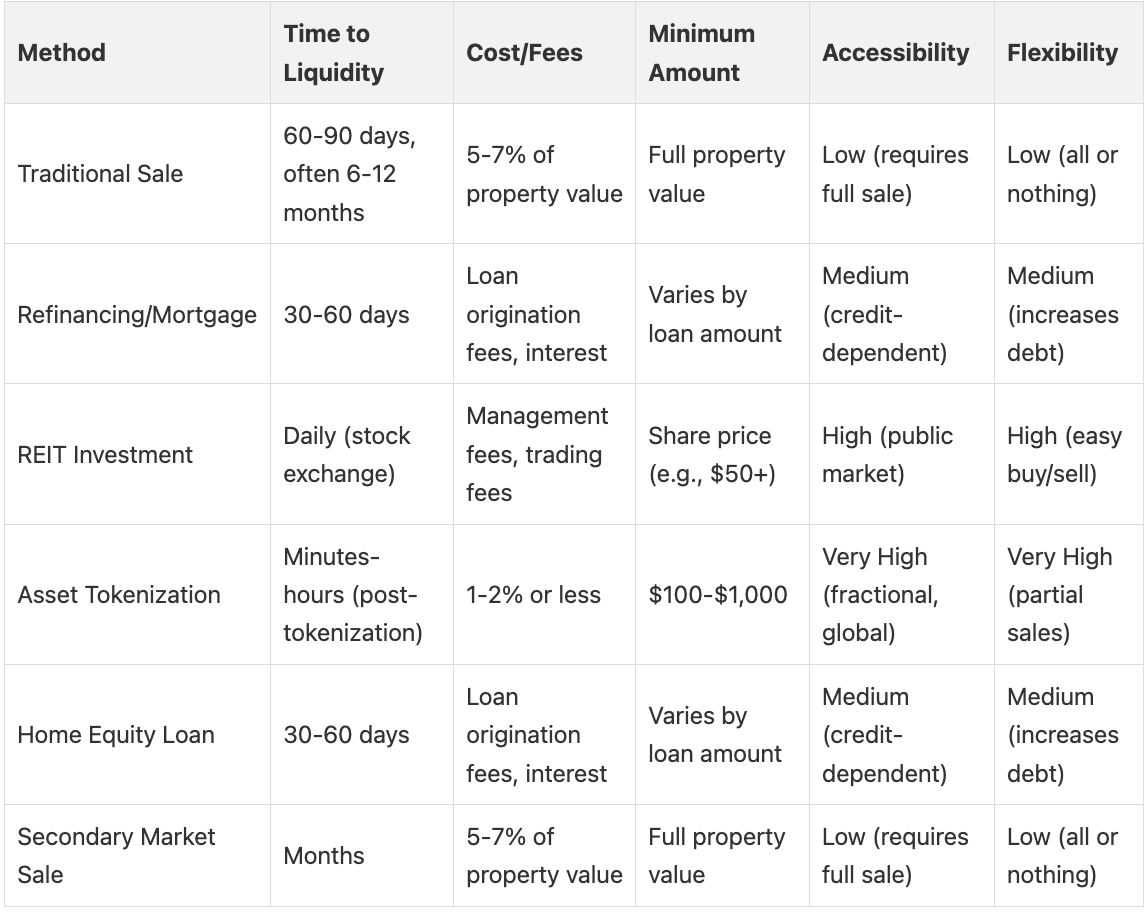
Real estate has historically been one of the most illiquid asset classes due to high transaction costs, lengthy sales cycles, and large capital requirements. Selling traditional commercial real estate assets can take anywhere from 60 to 90 days or even months, often extending to 6-12 months for complex deals. This protracted process locks capital, creating significant opportunity costs for developers, institutional investors, and individual property owners.
The illiquidity of real estate directly impacts portfolio diversification and risk management. Capital trapped in properties cannot be easily reallocated to more promising ventures or to mitigate risks in other investment areas. This challenge affects all stakeholders:
- Developers: Struggle to unlock capital mid-project, hindering project expansion or new development.
- Institutional Investors: Face difficulties rebalancing portfolios or meeting redemption requests without substantial discounts.
- Individual Property Owners: Cannot easily access equity without selling the entire asset, often through burdensome processes like refinancing.
Traditional Methods for Accessing Real Estate Liquidity
Conventional approaches to accessing real estate liquidity include refinancing, home equity loans, Real Estate Investment Trusts (REITs), and secondary market sales. While these methods offer some solutions, they come with notable limitations, costs, and timeframes.
- Refinancing/Home Equity Loans: Involve complex applications, credit checks, and can increase debt obligations.
- REITs: Offer daily liquidity via stock exchanges but involve indirect ownership and management fees, with investors holding shares of a fund rather than direct property interests. Public REITs also trade at discounts to Net Asset Value (NAV), averaging -9% to -28% in recent periods.
- Secondary Market Sales: Still subject to market conditions, buyer availability, and high transaction costs, typically 5-7% of property value.
These traditional methods often fall short for modern investors who require rapid capital access and greater flexibility. Integra recognizes these limitations and provides a superior alternative.
Blockchain-Enabled Asset Tokenization: The Modern Solution
Asset tokenization leverages blockchain technology to convert illiquid real estate into tradable digital assets called tokens. These tokens represent fractional ownership of a property, allowing investors to buy or sell small portions of an asset rather than the entire property. This process dramatically enhances liquidity, making real estate investments more accessible and efficient. The role of blockchain is critical, creating transparent, immutable, and interoperable property markets where transactions are recorded securely and efficiently.
Step-by-Step Process to Unlock Liquidity Through Tokenization
Unlocking liquidity through tokenization with Integra involves a streamlined process designed for efficiency and compliance:
- Asset Evaluation and Preparation: We conduct a thorough assessment of the real estate asset, including due diligence and valuation, to determine its suitability for tokenization. This involves legal and financial structuring to define the underlying rights and obligations represented by the tokens.
- Legal Structuring and Regulatory Compliance: Our legal experts ensure that the tokenization process adheres to all relevant securities regulations and jurisdictional requirements in 2026. This includes defining the token as a security and complying with offerings like Regulation D or S in the U.S. The legal classification of the tokenized asset and its underlying structure are paramount for compliance.
- Technology Implementation: Integra deploys smart contracts on the blockchain, automating ownership transfer, rental income distribution, and compliance checks. We establish secure custody solutions for the digital assets and integrate with trading infrastructure to facilitate secondary market activities.
- Marketing Tokenized Assets and Secondary Market Creation: Once tokens are issued, Integra assists in marketing them to qualified investors. We facilitate the creation of secondary markets, enabling investors to trade their tokens 24/7, providing instant liquidity that traditional real estate cannot match.
Real-World Applications and Case Studies
Tokenization is already demonstrating its transformative power across the real estate sector. Developers are unlocking capital mid-project, allowing them to accelerate construction or fund new ventures. For example, Zoniqx tokenized over $100 million in institutional real estate in 2025. Institutional investors are accessing liquidity without needing to sell entire assets, enabling more dynamic portfolio management.
A notable example is the St. Regis Aspen Resort, which raised $18 million for 19% ownership through tokenization. A luxury villa in Dubai, valued at $480,000, sold out in under five minutes to 169 investors from 40 countries, showcasing the speed and global reach of tokenized assets. Compared to traditional sales, which incur 5-7% in combined fees, tokenized transfers can reduce costs to 1-2% or less, processing transactions in minutes rather than months.
Regulatory Considerations and Compliance in 2026
The regulatory landscape for tokenized real estate is evolving, with various jurisdictions establishing frameworks to govern digital assets. In 2026, the principle of "same activity, same risk, same regulatory outcome" is guiding global regulatory development. Tokenized real estate setups require continuous compliance obligations, including periodic reporting and restrictions on transfers.
Integra ensures regulatory adherence by building platforms that comply with established securities laws and emerging digital asset regulations. Our solutions incorporate robust KYC/AML checks, investor suitability assessments, and smart contracts that encode transfer rules, including investor eligibility and jurisdictional limits. This commitment to compliance protects investors and provides a secure environment for tokenized real estate transactions.
Key Takeaways
- Real estate illiquidity costs billions in trapped capital and missed opportunities.
- Tokenization transforms illiquid assets into tradable digital securities, enabling fractional ownership.
- Integra's platform provides the end-to-end infrastructure for compliant real estate tokenization.
- Tokenization significantly reduces transaction costs and timeframes compared to traditional sales.
- Regulatory clarity and institutional adoption are accelerating, making 2026 a pivotal year for tokenized real estate.
- Early adopters gain competitive advantages through enhanced liquidity and capital efficiency.
Conclusion: The Future of Real Estate Liquidity
The real estate market is undergoing a fundamental paradigm shift, moving from inherent illiquidity to unprecedented liquidity through asset tokenization. This transformation offers competitive advantages for developers, institutional investors, and property owners who embrace these modern solutions. The global tokenized real estate market is projected to reach hundreds of billions in value by 2026, with some estimates approaching $1 trillion at full institutional adoption.
Integra stands at the forefront of this revolution, providing the secure, compliant, and efficient infrastructure needed to unlock trapped capital. By tokenizing real estate stakeholders can access capital faster, reduce transaction costs, and tap into a global pool of investors. The future of real estate liquidity is here, and it is tokenized.
Frequently Asked Questions
How quickly can I access liquidity from tokenized real estate?
Once a real estate asset is tokenized on a platform like Integra, investors can typically access liquidity within minutes to hours through secondary market trading. This stands in stark contrast to traditional real estate sales, which often take 6-12 months to finalize.
What does it cost to tokenize a real estate asset?
The cost to tokenize a real estate asset typically includes legal structuring, technology implementation (smart contract development, platform integration), and ongoing platform fees. While initial setup costs vary, tokenization can reduce overall transaction fees from the traditional 5-7% to as low as 1-2% or less, leading to significant savings, especially at scale.
Is real estate tokenization legal and regulated?
Yes, real estate tokenization is legal and increasingly regulated in major jurisdictions, including the U.S., Europe, and the UAE. Tokens are typically classified as securities, meaning they must comply with existing securities laws. Integra provides compliant infrastructure, ensuring all tokenization projects adhere to relevant regulatory frameworks and investor protection standards.
What is the best way to unlock liquidity without selling my entire property?
Asset tokenization and fractional ownership offer the optimal solution for unlocking liquidity without selling your entire property. By tokenizing your asset, you can sell small, manageable fractions of ownership, retaining control over the majority of the property while accessing needed capital. This provides far greater flexibility than refinancing, which increases your debt burden, or traditional partial sales, which are often complex and illiquid.
Which types of real estate assets can be tokenized for liquidity?
A wide range of real estate assets can be tokenized for liquidity, including commercial properties (offices, retail, industrial), residential properties (single-family homes, multi-family units), development projects, and even raw land. While there isn't a strict minimum valuation, properties with clear title, predictable cash flows, and institutional appeal are generally best suited for tokenization.
How does tokenized real estate liquidity compare to REITs?
Tokenized real estate offers more direct ownership and control compared to REITs, which are pooled investments representing shares in a portfolio of properties. While REITs provide daily liquidity on stock exchanges, tokenization allows for 24/7 trading of direct fractional ownership in a specific asset. Tokenization also often features lower minimum investment amounts and can offer higher yields (e.g., 8-12% average in 2025 for tokenized projects compared to 3.5-4% for REITs), making it a compelling alternative for asset owners seeking efficient capital access and investors desiring granular exposure.
Recent Blogs

Welcome to the Integra Testnet: A First-Time User's Guide
.png)
Data is the Missing Infrastructure of Tokenized Real Estate

How Blockchain Solves Real Estate Fragmentation
Unlock Liquidity from Illiquid Real Estate Assets
Inside Integra